
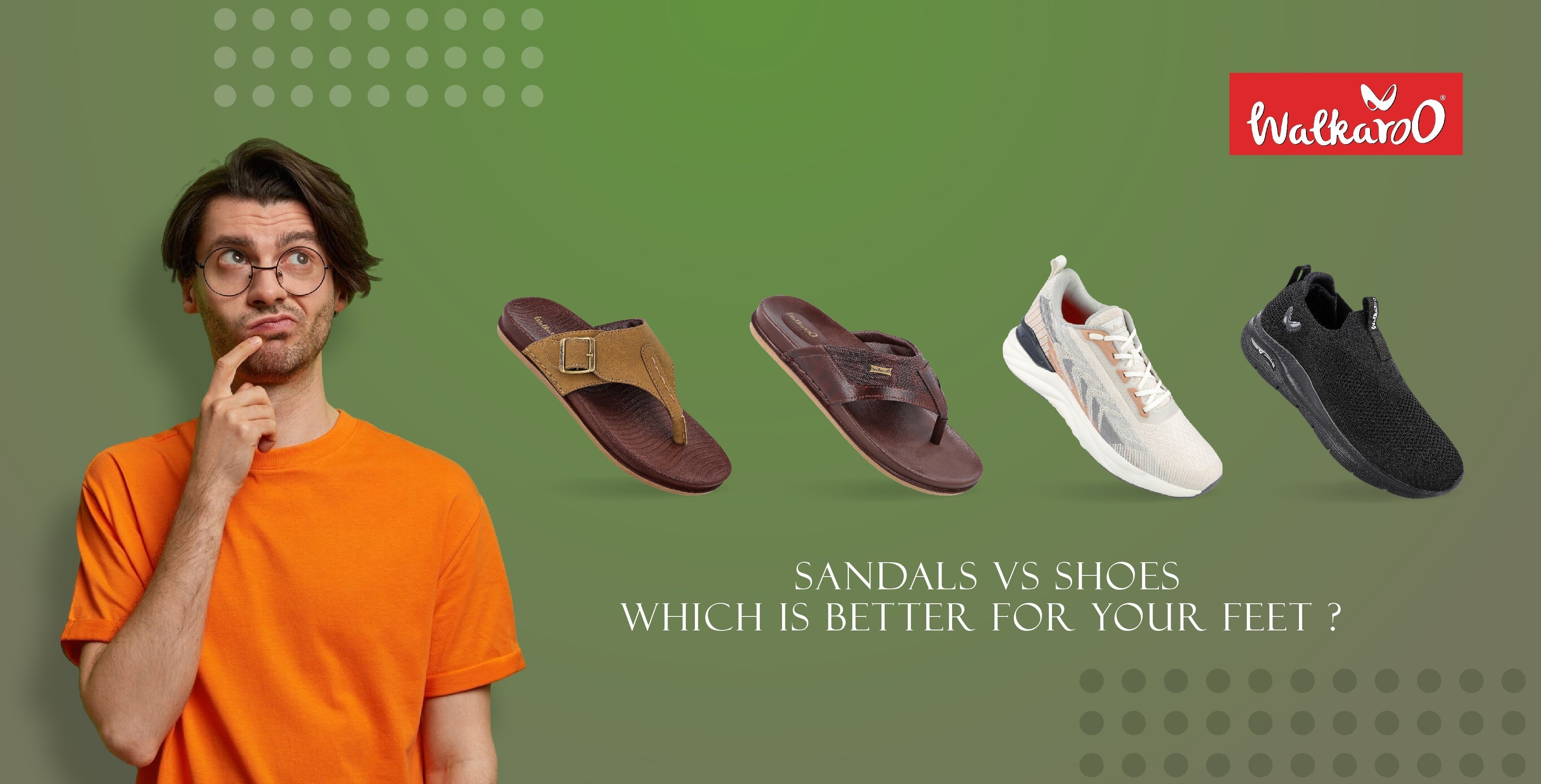
Choosing between sandals and shoes can be confusing. Should you wear sandals for better breathability, or are shoes better for support and protection? The answer depends on where you're going, how long you'll be on your feet, the weather, and the type of footwear you choose .
In general, sandals are a great choice for hot weather, casual outings, short walks and situations where breathability matters. Shoes are usually a better choice for long walks, sports, hiking, cold weather and activities that require greater protection and stability.
However, not every sandal or shoe provides the same level of comfort or support. A supportive walking sandal can be a better choice for walking than an unsupportive shoe, while a poorly designed flip-flop may be less suitable for extended walking.
Let's compare sandals and shoes to help you choose the right footwear for your feet.
Sandals vs Shoes: Quick Comparison
|
Feature |
Sandals |
Shoes |
|
Breathability |
Excellent |
Moderate to good, depending on material |
|
Foot protection |
Moderate |
Generally higher |
|
Support |
Depends on design |
Usually higher |
|
Stability |
Depends on style |
Generally higher |
|
Hot-weather comfort |
Excellent |
Moderate |
|
Short walks |
Excellent |
Excellent |
|
Long-distance walking |
Depends on design |
Usually better |
|
Running & sports |
Generally unsuitable |
Designed for specific activities |
|
Hiking |
Limited to suitable hiking sandals |
Usually better |
|
Cold-weather protection |
Low |
High |
|
Easy to put on |
Very easy |
Depends on style |
|
Casual wear |
Excellent |
Excellent |
|
Formal occasions |
Some styles |
Excellent |
Are Sandals Better Than Shoes for Your Feet?

Neither sandals nor shoes are automatically better for your feet. The right choice depends on the footwear design, your activity, the weather and your individual comfort needs.
Supportive sandals can be excellent for warm weather because they allow more airflow and are easy to wear. Shoes generally provide greater coverage, stability and protection, making them more suitable for long walks, sports, uneven surfaces and colder conditions.
The most important factors are proper fit, adequate support, cushioning, stability, comfort and choosing footwear that matches the activity .
Benefits of Wearing Sandals
Sandals are particularly useful in warm and humid conditions. Their open design allows more airflow around your feet and makes them easy to wear for casual activities.
1. Better Breathability
One of the biggest advantages of sandals is ventilation. The open construction allows air to circulate around your feet, which can make them feel more comfortable during hot summer days.
Sandals can be particularly convenient for:
- Summer outings
- Vacations
- Beach trips
- Casual shopping
- Relaxed gatherings
- Short walks
2. Lightweight and Easy to Wear
Many sandals are lightweight and simple to put on and remove. Slides and slip-on sandals are especially convenient when you don't want to spend time tying or fastening footwear.
They're also useful while travelling because they can be quickly removed when necessary.
3. Comfortable for Warm Weather
In India's hot and humid climate, wearing closed footwear for extended periods can sometimes feel uncomfortable. A well-designed sandal provides more ventilation and can be a practical option for everyday summer use.
4. Many Styles to Choose From
Sandals are available in different designs for different occasions.
Popular options include:
- Flip-flops
- Slides
- Flat sandals
- Walking sandals
- Sports sandals
- Wedge sandals
- Casual sandals
The important thing is to choose a design based on the activity rather than appearance alone.
Benefits of Wearing Shoes

Shoes provide greater coverage around the foot and are generally more suitable when protection, stability or support is important.
1. Better Foot Protection
Closed shoes protect more of your foot from:
- Uneven surfaces
- Small stones and debris
- Accidental impacts
- Cold weather
- Certain outdoor conditions
This makes them a practical choice for active environments.
2. More Stability and Support
Many shoes are designed with structured soles, heel support and cushioning. Depending on the design, they can provide more stability than lightweight sandals.
This can be especially useful when walking for longer periods or participating in activities that involve repetitive movement.
3. Better for Sports and Active Activities
Different activities require different types of footwear .
For example:
- Running → running shoes
- Gym workouts → training shoes
- Hiking → hiking shoes
- Sports → sport-specific shoes
- Long walks → walking shoes
Using activity-appropriate footwear can provide better comfort and protection than choosing footwear simply based on appearance.
4. Better for Cold Weather
Shoes cover more of the foot than sandals, helping protect your feet from cold temperatures, wind and wet conditions.
For winter or colder environments, closed shoes are generally the more practical option.
Not All Sandals Are the Same

One of the biggest mistakes people make is treating every sandal as the same.
A flat flip-flop and a supportive walking sandal have very different purposes.
1. Flip-Flops
Flip-flops are convenient for:
- Beaches
- Pools
- Short errands
- Casual use
- Quick trips
However, they may not be the best choice for long-distance walking because they generally provide less structure and stability than purpose-built walking footwear.
2. Walking Sandals
Walking sandals are designed with features such as:
- Supportive footbeds
- Secure straps
- Cushioning
- Better grip
- More structured soles
They can be a useful alternative to closed shoes when you want greater breathability while walking.
3. Slides
Slides are easy to put on and convenient for casual use.
They're ideal for:
- Quick outings
- Relaxed wear
- Home use
- Casual activities
For longer walks, however, choose a slide with a secure fit and supportive construction.
4. Wedge Sandals
Wedge sandals combine style with added height and can be suitable for social or casual occasions.
However, they aren't necessarily the best choice for prolonged walking, uneven surfaces or activities requiring maximum stability.
Sandals vs Shoes for Foot Health
Footwear affects comfort, but there isn't one style that is universally healthiest for everyone.
When choosing between sandals and shoes, consider:
1. Support
If you need additional support, look for footwear with a well-structured sole and comfortable footbed.
Some shoes can also accommodate specific insoles or orthotics, depending on their construction.
2. Fit
A good fit is essential regardless of whether you're wearing sandals or shoes.
Your footwear should:
- Feel comfortable from the start
- Allow adequate room for your toes
- Hold your foot securely
- Avoid excessive rubbing
- Avoid creating pressure points
- Stay comfortably in place while walking
3. Cushioning
Cushioning can improve comfort, particularly when you're walking or standing for extended periods.
However, the ideal amount of cushioning depends on the footwear type and your personal preferences.
4. Stability
Shoes generally provide more coverage and stability, while supportive sandals can also offer good stability when designed with secure straps and a structured footbed.
5. Breathability
Sandals generally provide greater airflow because of their open construction.
This can make them particularly comfortable during hot and humid weather.
Sandals vs Shoes for Different Activities
The best footwear depends heavily on what you're doing.
1. For Everyday Use
Both sandals and shoes can work well for everyday use.
Choose sandals when:
- The weather is hot
- You're doing casual activities
- You prefer an open design
- You're taking shorter walks
Choose shoes when:
- You're walking for longer periods
- You need more foot protection
- You're travelling through uneven areas
- You prefer greater coverage
2. For Walking
For short, casual walks, both sandals and shoes can be suitable.
For longer walks, look for footwear with:
- Good cushioning
- Secure fit
- Adequate support
- Comfortable sole
- Good traction
A supportive walking sandal may work well in warm weather, while walking shoes may be preferable when you need greater coverage and protection.
3. For Running
Choose running shoes rather than ordinary sandals.
Running creates repetitive impact and requires footwear designed specifically for the activity.
4. For Hiking
For hiking, choose footwear designed for hiking conditions.
Depending on the terrain and weather, this may include hiking shoes or purpose-built hiking sandals.
Ordinary flip-flops and casual sandals are generally not suitable for challenging trails.
5. For Travel
Travel footwear should balance:
- Comfort
- Weight
- Ease of use
- Support
- Versatility
A practical travel combination can include comfortable sandals for warm, casual activities and walking shoes for longer days or more demanding activities.
6. For Office and Formal Occasions
Formal shoes are generally the more appropriate choice for business meetings, professional environments and formal events.
However, dress sandals may be suitable for certain casual or semi-formal settings depending on the occasion.
Sandals vs Shoes for Indian Weather
India's varied weather makes footwear selection particularly important.
1. Summer
Sandals are often a comfortable choice for hot weather.
Their open construction allows more airflow and can make them feel cooler during casual activities.
2. Monsoon
During rainy weather, look for footwear with:
- Good grip
- Secure fit
- Water-resistant or quick-drying materials where appropriate
- Soles designed for better traction
Avoid footwear that becomes excessively slippery when wet.
3. Winter
Closed shoes are generally more suitable for colder weather because they provide greater coverage and help keep your feet warmer.
What Makes a Sandal Good for Your Feet?

If you plan to wear sandals regularly, look for:
1. Comfortable Footbed
A well-designed footbed can make walking more comfortable.
2. Secure Straps
Your sandal should stay securely on your foot without excessive movement.
3. Adequate Cushioning
Cushioning can help improve comfort during everyday walking.
4. Good Grip
Choose an outsole that provides appropriate traction for the surfaces where you'll be walking.
5. Enough Toe Room
Your toes should have enough room to move naturally without being squeezed.
6. Suitable Support
For extended walking, consider sandals specifically designed for walking rather than extremely flat casual styles.
What Makes a Shoe Good for Your Feet?
When choosing shoes, look for:
- Proper size and fit
- Enough toe room
- Comfortable cushioning
- Appropriate support
- Secure fastening
- Suitable sole construction
- Good traction
- Breathable materials when appropriate
- A design suited to your activity
Remember that a shoe designed for running may not be the best choice for formal wear, and a formal shoe may not be appropriate for long-distance walking.
7 Signs Your Footwear May Not Be Right for You
Your footwear may need to be changed or reassessed if you regularly experience:
- Persistent foot discomfort
- Repeated blisters
- Pressure around the toes
- Excessive slipping
- Numbness or tingling
- Significant foot fatigue
- Pain after relatively short periods of walking
If you experience persistent or significant foot pain, consider speaking with a qualified healthcare professional.
How to Choose the Right Footwear for Your Feet

Before buying sandals or shoes, ask yourself these questions:
1. Where will I wear them?
Beach, office, travel, walking and sports all require different footwear.
2. How long will I wear them?
For short outings, comfort and convenience may be your main priorities. For long days on your feet, support, cushioning and stability become more important.
3. What is the weather like?
Choose breathable footwear for hot weather and more protective footwear for cold or challenging conditions.
4. Do I need extra support?
If you have specific foot-support requirements, look for footwear designed to meet those needs and consider professional advice when appropriate.
5. Does the footwear fit properly?
Never choose footwear based only on its appearance. A comfortable fit should be one of your top priorities.
Sandals vs Shoes: Which One Should You Choose?
Use this simple guide:
1. Hot weather + casual outing → Sandals
2. Beach or pool → Sandals
3. Short walk → Comfortable sandals or shoes
4. Long-distance walking → Walking shoes or supportive walking sandals
5. Running → Running shoes
6. Hiking → Hiking shoes or suitable hiking sandals
7. Office/formal event → Formal shoes
8. Cold weather → Closed shoes
9. Uneven outdoor terrain → Protective shoes or activity-specific footwear
10. Standing for long periods → Supportive, well-fitting footwear
The goal isn't to choose sandals over shoes—or shoes over sandals. The goal is to choose footwear that matches your activity, environment and comfort needs .
Final Verdict: Are Sandals or Shoes Better?
Sandals and shoes can both be good choices for your feet when you select the right design for the right situation.
Sandals are particularly useful for hot weather, casual outings, short walks and situations where breathability matters .
Shoes are generally better when you need greater protection, stability, coverage, warmth or activity-specific support .
For the best everyday comfort, focus less on whether footwear is called a sandal or a shoe and more on fit, support, cushioning, stability, grip and intended use .
Key Takeaway
Sandals are ideal when you want breathability and easy comfort, while shoes are generally better when you need protection, stability and coverage. The right footwear is the one that fits properly and matches how, where and how long you'll use it.
Frequently Asked Questions
1. Are sandals better than shoes for your feet?
Not necessarily. Supportive sandals can be comfortable in hot weather and for casual walking, while shoes generally provide greater coverage, protection and stability. The best choice depends on the footwear design and activity.
2. Are shoes better than sandals for walking?
For longer walks, shoes are often a practical choice because they generally provide greater coverage and stability. However, supportive walking sandals can also be suitable, particularly in warm weather.
3. Are sandals good for everyday use?
Yes. Comfortable, well-fitting sandals can work well for everyday casual use, especially in warm weather. Choose a supportive design if you'll be walking or standing for extended periods.
4. Are sandals good for long-distance walking?
Some walking sandals are designed for extended walking and can be comfortable for longer distances. Look for secure straps, cushioning, good traction and a supportive footbed. Simple flip-flops are generally better suited to short, casual use.
5. Do shoes provide better arch support than sandals?
Shoes often offer more structured support, but this depends on the specific design. Some walking sandals are also designed with supportive footbeds.
6. Can sandals cause foot pain?
They can if they don't fit properly or aren't suitable for the activity. Wearing unsupportive sandals for extended periods may be uncomfortable for some people. Choose sandals with an appropriate fit and construction for your intended use.
7. Are flip-flops bad for your feet?
Flip-flops aren't automatically bad for your feet, but they are generally designed for casual, short-duration use. For long walks or demanding activities, choose footwear with greater support, cushioning and stability.
8. What type of sandals are best for walking?
Look for walking sandals with a supportive footbed, secure straps, cushioning, adequate toe room and a grippy outsole. The sandal should fit securely without rubbing or slipping.
9. Should I wear sandals or shoes in hot weather?
Sandals are often more comfortable in hot weather because their open design allows greater airflow. However, if you need additional protection or support, lightweight breathable shoes may be a better option.
10. Are shoes better for standing all day?
Supportive, well-fitting shoes can be a practical choice for prolonged standing because they generally provide greater coverage, stability and cushioning. However, comfort depends on the individual footwear design and your feet.
11. Can I wear sandals for hiking?
Purpose-built hiking sandals can work for some trails and weather conditions. However, ordinary flip-flops or casual sandals are generally unsuitable for challenging terrain. Choose footwear based on the trail, surface, weather and level of protection required.
12. How should I choose footwear for my foot type?
Start with proper fit, adequate toe room, comfort, support and the activity you'll be doing. If you have persistent foot pain or specific foot-health concerns, consult a qualified healthcare professional for individual guidance.



Share:
A Guide to Buy Genuine Leather Shoes for Men
Give the Gift of Comfort: Best Festive Shoes for Every Occasion (2026 Guide)